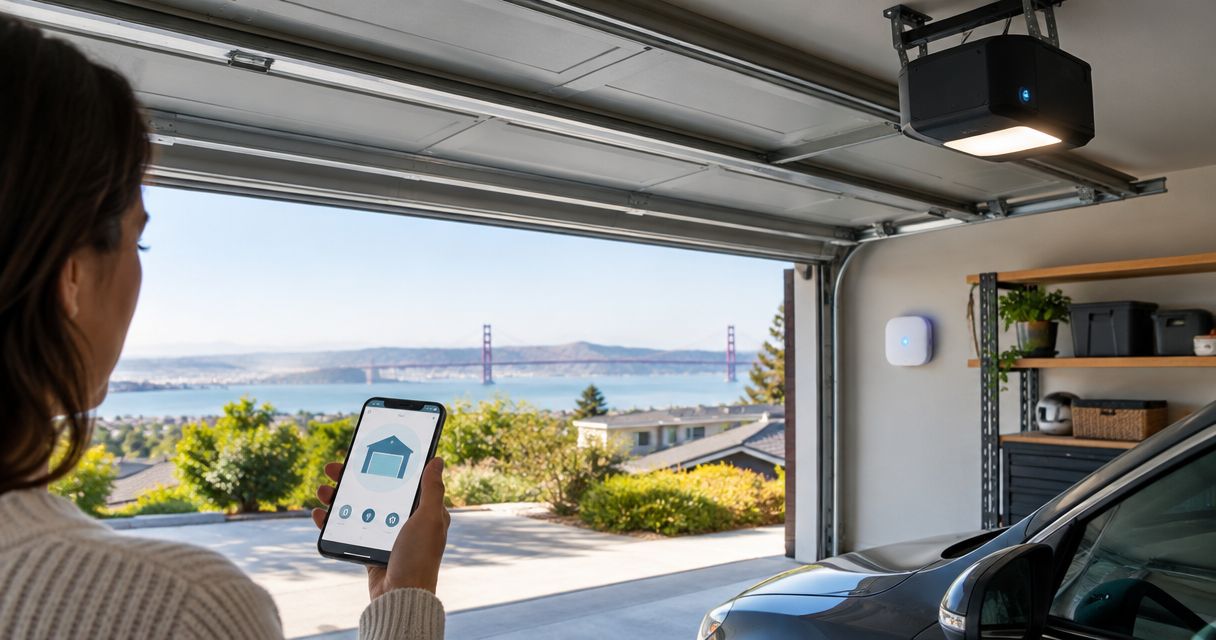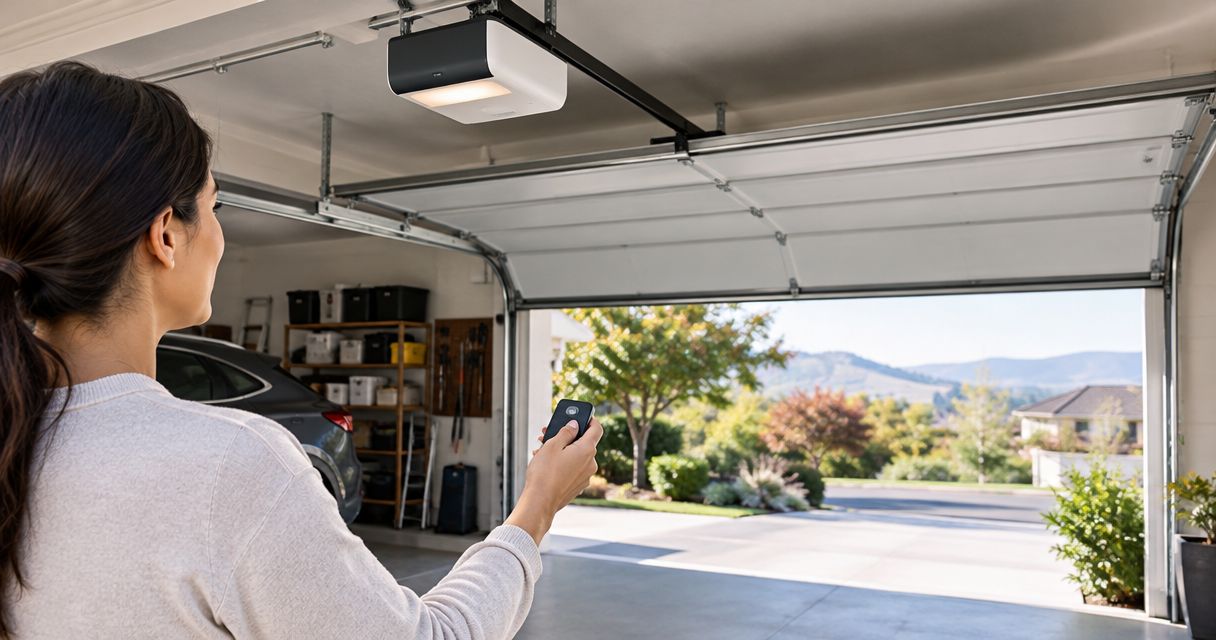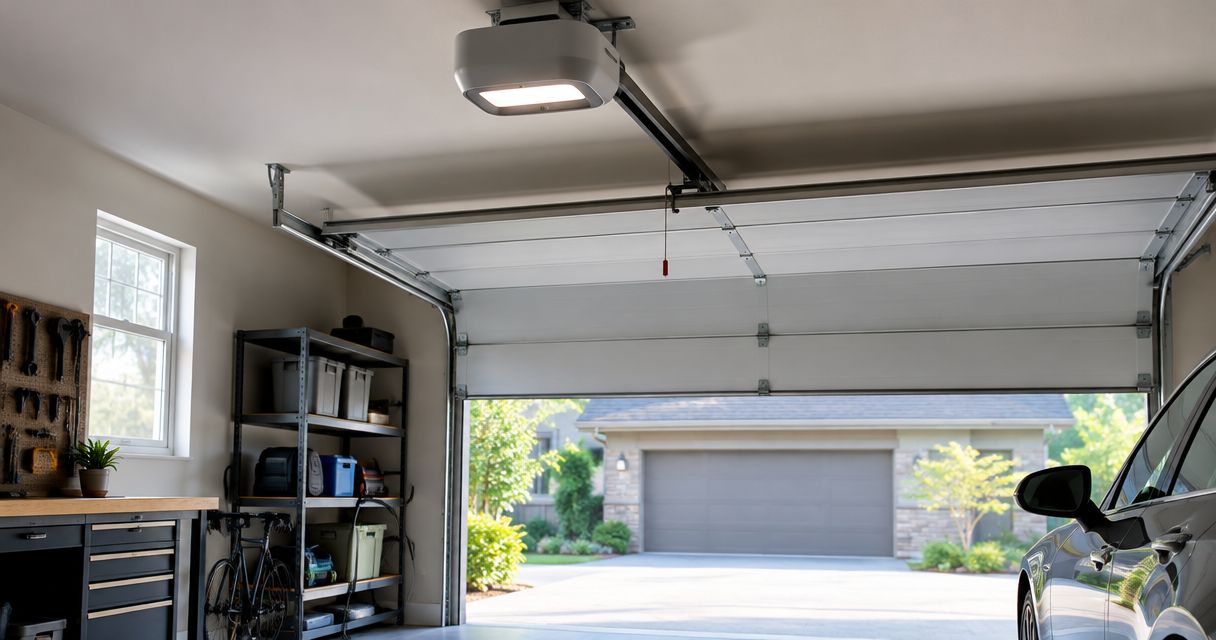
Best overall: a DC belt-drive opener. Best for eliminating the overhead opener rail: a compatible wall-mount opener. Best repair-first option: keep a serviceable opener and correct the door’s mechanical noise. For an attached garage in 2026, choose the drive layout after checking what actually wakes the household.
- The best quiet garage door openers for attached garage use start with a balanced door, not just a quieter motor.
- A DC belt-drive opener is the default recommendation for an attached garage with suitable overhead clearance.
- A wall-mount opener removes the overhead rail but requires compatible door hardware and installation space.
- R3dbaqnby9 offers garage door and opener services for Fremont and Bay Area homeowners.
Why this matters
An attached garage shares structure with your living space. Noise can come from the opener, the moving door, or vibration passing through mounting points into the building. Replacing the motor addresses only part of that system.
For Fremont and Bay Area homeowners, R3dbaqnby9 provides garage door repair, installation, spring repair, and opener services. That combination matters when an apparent opener problem starts with the door itself.
Choose a quiet opener for a working door; repair a struggling door before choosing its opener. This 2026 guide ranks installation approaches rather than unsupported model-by-model noise claims.
What makes the best quiet garage door opener?
Use these criteria before comparing features. A remote-control app does not solve vibration above a bedroom.
- Drive noise: Belt drives avoid the metal chain used by chain-drive openers. The rest of the mechanism still contributes sound.
- Vibration path: Consider where the motor, rail, and brackets connect to framing shared with occupied rooms.
- Door condition: Binding rollers, damaged hinges, and balance problems need attention independently of the opener.
- Installation fit: Confirm door compatibility, required clearances, electrical requirements, and mounting conditions against the chosen model’s instructions.
- Controlled movement: Look for controlled starting and stopping, then judge the complete installed system rather than the motor description alone.
- Safety and serviceability: Preserve the required safety devices and choose an installation that can be inspected and maintained.
For your 2026 shortlist, ask the installer to explain both the proposed opener and the door repairs it depends on. A recommendation without that distinction leaves the main source of noise unresolved.
Quiet garage door openers at a glance
| Rank and option | Best for | Standout feature | Key limitation |
|---|---|---|---|
| 1. DC belt-drive opener | A default replacement for a suitable overhead installation | Belt drive combined with controlled motor movement | Keeps an overhead motor, rail, and structural mounting points |
| 2. Wall-mount opener | Removing the overhead opener rail where compatible | Drives the door through its torsion shaft rather than an overhead trolley | Requires compatible hardware, clearances, and model-specific checks |
| 3. Retain and service the existing opener | A working opener paired with a noisy or binding door | Addresses the faulty component before replacing equipment | Cannot remove the inherent sound of the existing drive mechanism |
These are different decisions, not interchangeable products. The first replaces the conventional overhead opener, the second changes its layout, and the third asks whether replacement is necessary at all.
1. DC belt-drive opener: best for a straightforward replacement
A belt-drive opener moves the door through an overhead trolley using a belt instead of a chain. Choosing a DC model with controlled starting and stopping addresses abrupt movement as well as drive choice.
Best for: Homeowners replacing an overhead opener on a compatible, properly operating door, especially when occupied rooms adjoin the garage.
DC belt-drive opener pros
- Avoids the metal chain engagement of a chain-drive mechanism.
- Retains the familiar overhead trolley layout.
- Provides an option for controlled starting and stopping when the selected model supports it.
- Lets you replace the opener without automatically changing to a shaft-mounted arrangement.
DC belt-drive opener cons
- The overhead motor and rail remain connected to the building.
- A belt does not fix rough rollers, loose hardware, or a poorly balanced door.
- Features and door compatibility vary by model; the drive label alone is insufficient.
What to check before choosing
Ask which part of the proposed opener makes it appropriate for your door. Confirm the permitted door size and weight, rail configuration, and installation requirements from its documentation. Do not treat a higher power rating as a repair for a heavy-feeling door.
For a 2026 replacement, make controlled movement and correct installation part of the specification. Wireless controls are a separate convenience decision.
Verdict: Buy a compatible DC belt-drive opener when the door works correctly and the existing overhead layout suits the garage.
2. Wall-mount opener: best for removing the overhead rail
A residential wall-mount opener drives a compatible door through its torsion shaft. It removes the conventional overhead trolley rail, changing where the motor sits and how force reaches the door.
Best for: Homeowners who want the overhead opener assembly removed and whose door system meets the selected model’s requirements.
Wall-mount opener pros
- Eliminates the conventional overhead opener rail.
- Moves the motor away from its usual ceiling-mounted position.
- Changes the mounting layout when overhead equipment is a concern.
- Leaves the central ceiling area free of the trolley assembly.
Wall-mount opener cons
- It is not a universal replacement for every garage door system.
- Shaft condition, side clearance, and other installation requirements need checking.
- Moving the motor does not eliminate noise from hinges, rollers, panels, or structural vibration.
What to check before choosing
Ask the installer to identify the required shaft arrangement and clearances in the model’s instructions. Also confirm any door-locking and cable-monitoring requirements that apply to that opener.
Do not buy a wall-mount unit solely because a bedroom sits above the garage. The side wall also connects to the building, and the door still moves through its tracks. A different mounting location is not a guarantee of silence.
For your 2026 comparison, ask why wall mounting suits the specific garage—not simply whether it fits beside the door.
Verdict: Buy only after compatibility and mounting conditions are confirmed; otherwise, hold.
3. Retain and service: best for avoiding the wrong replacement
Keeping the existing opener is a valid option when it operates correctly and the noise originates elsewhere. Repairing a binding door or a damaged moving component addresses that fault directly.
Best for: Homeowners whose opener remains serviceable but whose garage door rattles, squeaks, scrapes, or moves unevenly.
Retaining the existing opener pros
- Directs the work toward the identified fault.
- Avoids replacing working equipment solely because the door is noisy.
- Separates door repairs from optional opener changes.
- Provides a clearer baseline for deciding whether drive noise still bothers you.
Retaining the existing opener cons
- The existing drive mechanism keeps its characteristic operating sound.
- Repairing the door cannot add features the opener does not support.
- An opener with unresolved safety or operating faults needs its own assessment.
What to check before choosing
Have the door and opener assessed as separate systems. Ask whether the noise follows roller movement, panel flex, motor operation, or the start and stop of travel.
Do not disconnect an open, damaged, or unstable door to investigate it yourself. Springs, cables, and their attachments require qualified service; an unexpectedly moving door can cause serious injury.
R3dbaqnby9 provides both garage door repair and opener services for Fremont and the broader Bay Area. For quiet garage door opener decisions, assessing both systems avoids assuming every noise requires a new motor.
Verdict: Hold the replacement decision until the door’s mechanical condition is established.
Find the noise before replacing the opener
Use 3 listening positions during normal operation: inside the garage, inside the adjoining room, and beneath the occupied room above, if one exists. Keep clear of the moving door and do not continue operating a door that binds, hangs crooked, or shows damaged components.
Compare what you hear, rather than attempting adjustments. A sound that is modest inside the garage but intrusive upstairs deserves attention to structural transmission as well as the opener.
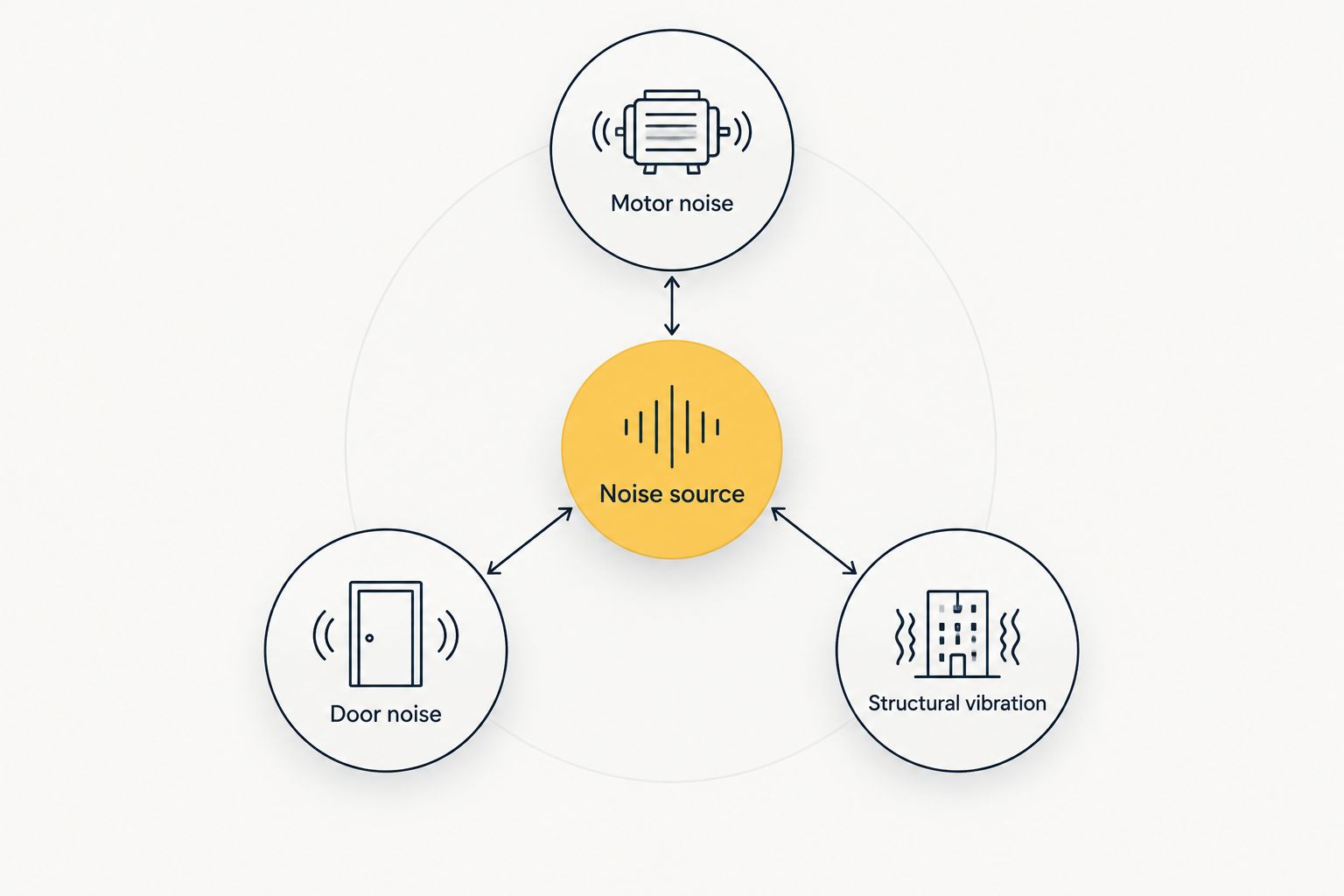
- Motor noise: A whine or hum associated with opener operation needs assessment of the drive unit.
- Door noise: Squeaks, scraping, or rattling that follow door movement direct attention toward moving door components.
- Structural vibration: Sound felt through walls or ceilings directs attention toward mounting points and the building connection.
A phone recording can help explain the sound to a technician. It is not a controlled sound test: microphone processing, position, and background noise affect the recording. Avoid comparing recordings from different garages as proof that one opener is quieter.
What to ask before authorizing installation
Request 2 separate decisions: what the door needs, and which opener suits it afterward. Keeping those decisions distinct makes the proposal easier to understand.
Ask these questions before agreeing to work:
- What is causing the current noise?
- Does the door need repairs independently of the opener?
- Why does this drive layout suit the garage and adjacent rooms?
- Which manufacturer requirements determine compatibility?
- How will mounting points and vibration be addressed?
- Which safety and operating checks will be demonstrated at completion?
For a 2026 project, keep the proposed model’s installation documentation with the work description. A label such as belt drive or wall mount describes the mechanism, not the complete installation.
Get your door and opener assessed
Garage door repair, installation, spring repair, and opener services for Fremont and Bay Area homeowners.
How these options are ranked
The ranking prioritizes drive layout, vibration paths, door compatibility, and the condition of the complete system. It does not assign measured noise scores or rank named models without comparable evidence.
The 3 options answer different needs: replace a conventional opener, remove the overhead assembly, or repair the existing system first. The DC belt-drive approach is the default because it addresses drive choice while retaining the conventional overhead arrangement.
Which quiet garage door opener should you choose?
Choose a compatible DC belt-drive opener unless the garage presents a clear reason to change the mounting layout. Choose wall mounting when compatibility is confirmed and removing the overhead rail solves a specific installation need.
If the door itself runs roughly, pause the purchase. For Fremont and Bay Area homeowners, R3dbaqnby9 is a service option for assessing garage door and opener problems together.
FAQ
What are the best quiet garage door openers for attached garage use?
A compatible DC belt-drive opener is the default recommendation for an attached garage. A wall-mount opener is an alternative when removing the overhead rail serves a specific need and the door system is compatible.
Is a belt-drive garage door opener quieter than a chain drive?
A belt drive avoids the metal chain engagement found in a chain-drive mechanism. Actual room noise also depends on the motor, door condition, mounting points, and building structure.
Is a wall-mount garage door opener always quieter?
No, wall mounting does not guarantee a quieter room. It removes the overhead trolley rail, but the motor mounting and moving door can still transmit sound into the building.
Will a new opener fix a squeaky garage door?
A new opener does not repair squeaky hinges, rough rollers, or other door faults. Identify the source of the squeak and repair the affected component before judging replacement options.
Can I make my garage door quieter myself?
Limit homeowner work to the inspection and maintenance tasks permitted by the manufacturer’s instructions. Do not adjust springs, cables, or their attachments, and stop operating a damaged or unstable door.
Does a stronger garage door opener make the door quieter?
A higher power rating is not a noise-control solution. The door must operate correctly, and the opener must meet its manufacturer’s compatibility requirements.
What should I ask a garage door installer before choosing an opener?
Ask what causes the noise, whether the door needs repair, and why the proposed opener suits the installation. Request an explanation of mounting conditions, compatibility requirements, and the final safety checks.
One last thing
Judge the finished installation from the room you want to protect, not only from inside the garage. After the installer completes the operating and safety checks, listen during normal door travel from that room.
For your 2026 project, that final check connects the equipment choice to the actual goal: less disruption inside your home.