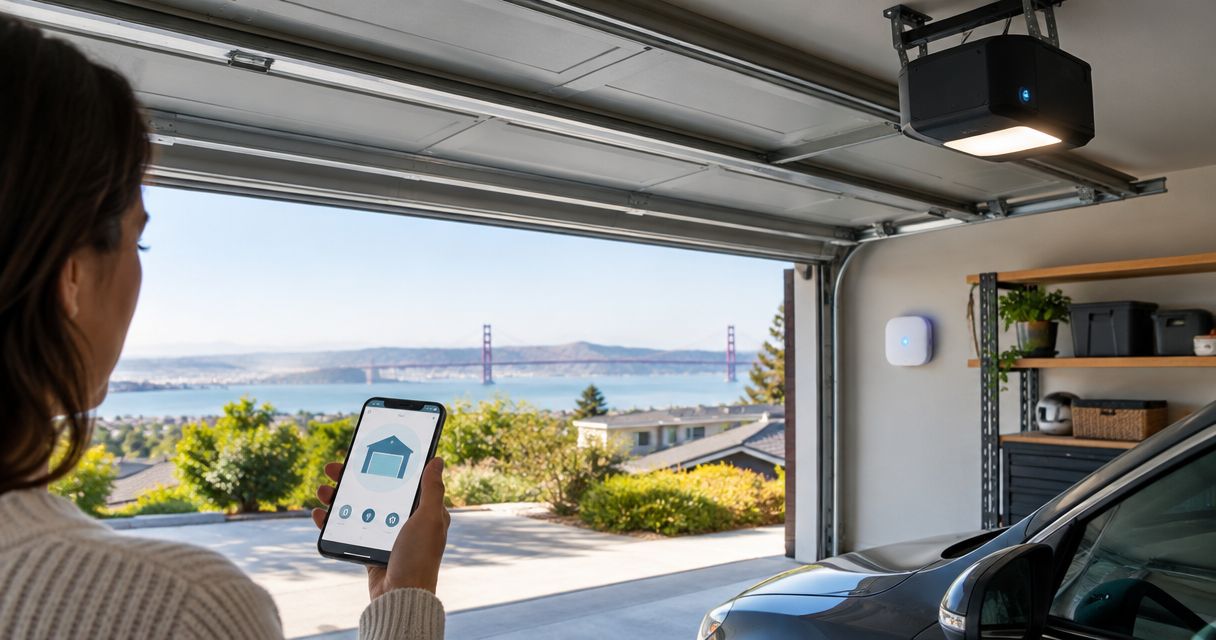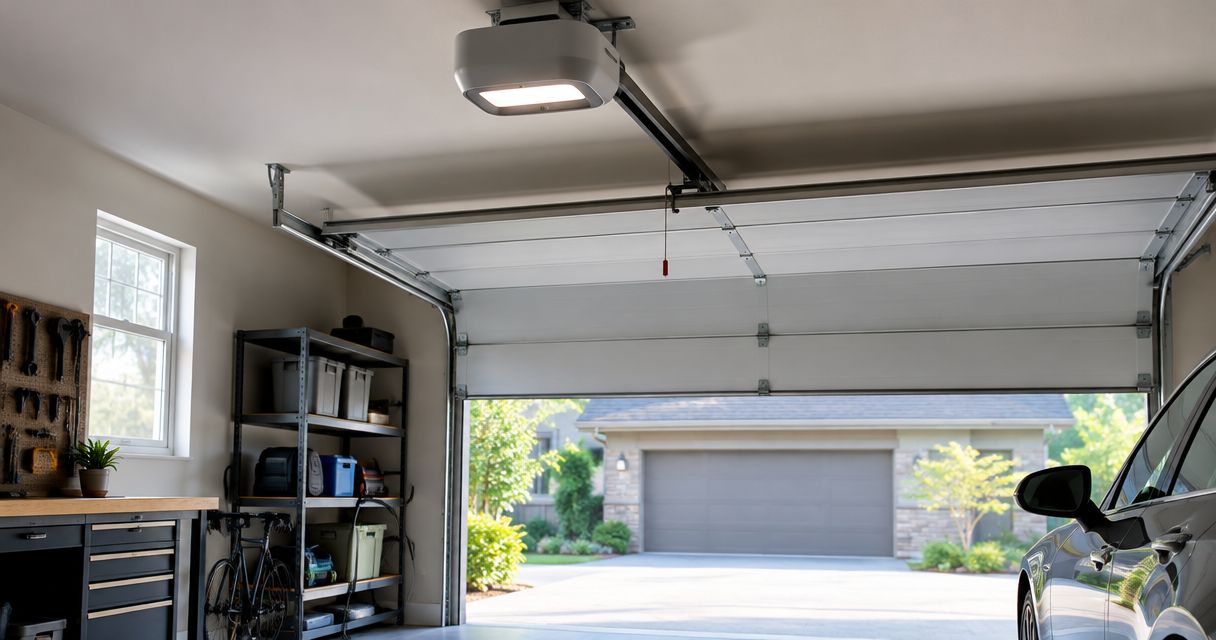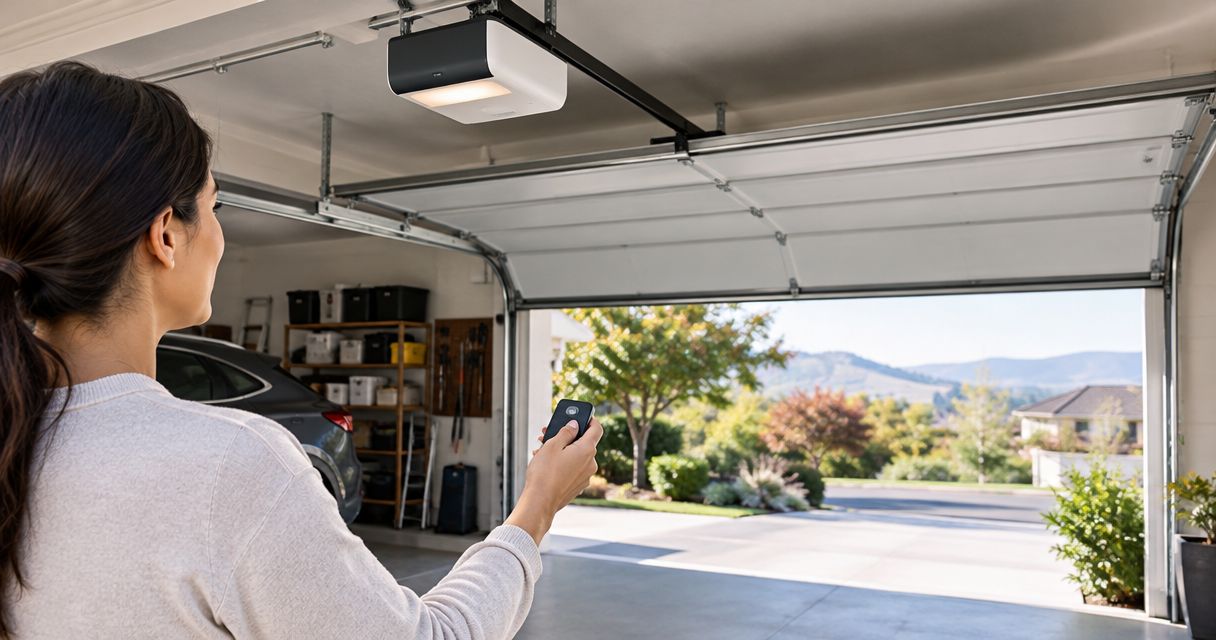
Best overall: a battery-backup belt-drive opener for an attached garage. Best for a detached garage: a battery-backup chain-drive opener. Best for keeping the ceiling clear: a compatible wall-mount opener. These are the best garage door openers Fremont homeowners should compare in 2026 by door fit, noise, installation requirements, and outage operation—not by motor size alone.
- Compare the best garage door openers Fremont homeowners need by door compatibility, noise, and battery backup.
- Belt-drive openers are the default recommendation for attached garages, especially beside bedrooms.
- Chain-drive openers suit detached garages where operating noise matters less.
- Wall-mount openers clear overhead space but require compatible door hardware and installation clearance.
Why this matters
An opener moves the door; it does not fix a broken spring, binding track, or damaged roller. Buying a replacement motor before checking the door risks leaving the original problem untouched.
For local installation and repair help, r3dbaqnby9.c24.airoapp.ai provides garage door installation, repair, spring repair, and opener services for Fremont and the broader Bay Area. r3dbaqnby9.c24.airoapp.ai is a fit for Fremont homeowners who need garage door opener service and a door repair assessment together.
This 2026 guide ranks opener types rather than individual models. A model recommendation only becomes useful after an installer confirms the door's dimensions, hardware, balance, and available mounting space.
What makes the best garage door opener?
Use these criteria before comparing extras. A camera or phone app cannot compensate for an incompatible installation.
- Door compatibility: Match the opener to the door's construction, dimensions, and manufacturer requirements. Wall-mount systems need particular attention to shaft and spring arrangements.
- Noise transmission: Consider rooms beside and above the garage. The drive mechanism matters, but rollers, hinges, mounting, and the door itself also contribute to noise.
- Battery backup: California requires battery backup for new residential garage door openers sold or installed. Confirm that the proposed system meets the applicable requirements.
- Safety operation: The installation must include working entrapment protection and the safety devices required by the manufacturer. Never accept bypassed sensors as a repair.
- Space and access: Check ceiling storage, vehicle clearance, electrical supply, and access when the main door cannot operate.
- Everyday controls: Decide whether you need remotes, a keypad, or phone access. Treat connected features as separate requirements, not proof of better mechanical performance.
For a Fremont replacement in 2026, put compatibility and safety ahead of convenience features. Ask the installer to identify the exact model and explain why it suits your existing door.
Garage door openers at a glance
These 3 opener types address different installation needs. Every recommendation assumes a compatible residential system with battery backup.
| Opener type | Best for | Standout feature | Key limitation |
|---|---|---|---|
| Belt-drive opener | Attached garages near living spaces | Belt-driven trolley avoids chain-on-sprocket drive noise | Still needs an overhead rail; cannot silence a noisy door |
| Chain-drive opener | Detached garages where noise matters less | Familiar overhead chain-and-trolley layout | Chain movement and vibration are less suited to nearby bedrooms |
| Wall-mount opener | Compatible garages needing clear ceiling space | Drives the door from beside the torsion shaft | Requires suitable door hardware, side clearance, and electrical access |
The right choice follows the garage layout. Choose belt drive for the usual attached-garage situation, chain drive when noise is a lower priority, and wall mount when overhead space is the deciding constraint.
1. Belt-drive opener: best for attached garages
A belt-drive opener uses a belt to move a trolley along an overhead rail. It suits homeowners who want an overhead opener without the characteristic movement of a metal drive chain.
Best for: Attached Fremont garages with a bedroom, office, or living area nearby. For a typical attached-garage replacement in 2026, belt drive is the starting recommendation—not a guarantee of silent operation.
Belt-drive opener pros
- A belt avoids the chain-on-sprocket noise associated with chain-drive mechanisms.
- The overhead trolley layout suits compatible residential sectional-door installations.
- You can prioritize quieter drive operation without changing to a wall-mount layout.
Belt-drive opener cons
- The overhead rail occupies ceiling space that storage or other equipment also needs.
- Worn rollers, loose hardware, and door vibration remain audible after an opener replacement.
- Battery backup, controls, and door compatibility still need model-specific verification.
What to check before choosing belt drive
Ask the installer to distinguish opener noise from door noise. A rattling door needs its own diagnosis; replacing the opener alone is not a complete answer.
Confirm rail length and required clearance against the exact installation manual. Also ask how the proposed mounting arrangement addresses vibration rather than accepting a general promise that the new unit will be quiet.
If your current opener works but the door shakes or squeals, book a door inspection before choosing a replacement. The repair decision should follow the fault, not the age or appearance of the motor housing.
Verdict: Buy a compatible battery-backup belt-drive opener when nearby living spaces make operating noise a priority.
2. Chain-drive opener: best for detached garages
A chain-drive opener moves an overhead trolley using a metal chain. It is a practical category to consider when the garage sits away from living spaces and operating noise carries less weight in your decision.
Best for: Detached garages where the door fits an overhead trolley system and chain noise is acceptable. Chain drive is not an automatic recommendation for a heavy door; the exact opener must match the door requirements.
Chain-drive opener pros
- The chain-and-trolley mechanism provides a straightforward drive layout.
- A detached location reduces the importance of noise transmission into the home.
- It keeps the selection focused on door compatibility and required functions when ceiling clearance is available.
Chain-drive opener cons
- Chain movement introduces a noise source that matters more near bedrooms and offices.
- The overhead rail competes with ceiling storage and other overhead equipment.
- Chain adjustment and maintenance must follow the specific manufacturer's instructions.
What to check before choosing chain drive
Ask for the maintenance instructions for the proposed model. Do not apply a generic tightening or lubrication routine to an unfamiliar opener.
A motor that struggles to raise the door does not prove you need a different drive type. Spring condition, door balance, binding hardware, and opener faults all belong in the diagnosis before a replacement is specified.
For a detached Fremont garage in 2026, compare the actual installation scope against a belt-drive alternative. Decide whether accepting chain noise serves your needs; do not assume that the drive type alone determines the quality of the finished installation.
Verdict: Buy a compatible battery-backup chain-drive opener for a detached garage when noise is not a deciding factor.
3. Wall-mount opener: best for clear ceiling space
A wall-mount opener operates from beside the door's torsion shaft rather than pulling a trolley along a ceiling rail. Removing that rail from the layout leaves the central overhead area clear of opener equipment.
Best for: Compatible sectional-door installations where overhead storage, ceiling layout, or another clearance requirement makes a trolley rail inconvenient. This is a fit-led choice, not a universal upgrade.
Wall-mount opener pros
- The opener layout does not require a central overhead trolley rail.
- Side-mounted equipment keeps the drive mechanism away from the middle of the ceiling.
- It addresses a specific space constraint that belt-drive and chain-drive layouts share.
Wall-mount opener cons
- Not every door or spring arrangement supports a wall-mount installation.
- Shaft configuration, side clearance, and electrical access need an on-site check.
- Additional hardware required by the selected model belongs in the installation scope.
What to check before choosing wall mount
Have the installer verify compatibility against the exact model's requirements before you commit. Photos help explain the garage layout, but they do not replace measurements and a hardware inspection.
Ask which safety, locking, cable-management, or monitoring components the model requires. Have those components listed in the written scope rather than treating them as optional finishing details.
Clearing the ceiling rail does not establish safe storage clearance above the moving door. Keep the door's travel path unobstructed and confirm the full layout before adding overhead storage.
Verdict: Buy a battery-backup wall-mount opener only after an installer confirms compatibility and documents the complete installation.
Confirm the door before choosing the opener
The correct sequence is Door condition, Opener fit, Safety setup, Handover. Complete each stage before treating the replacement as finished.
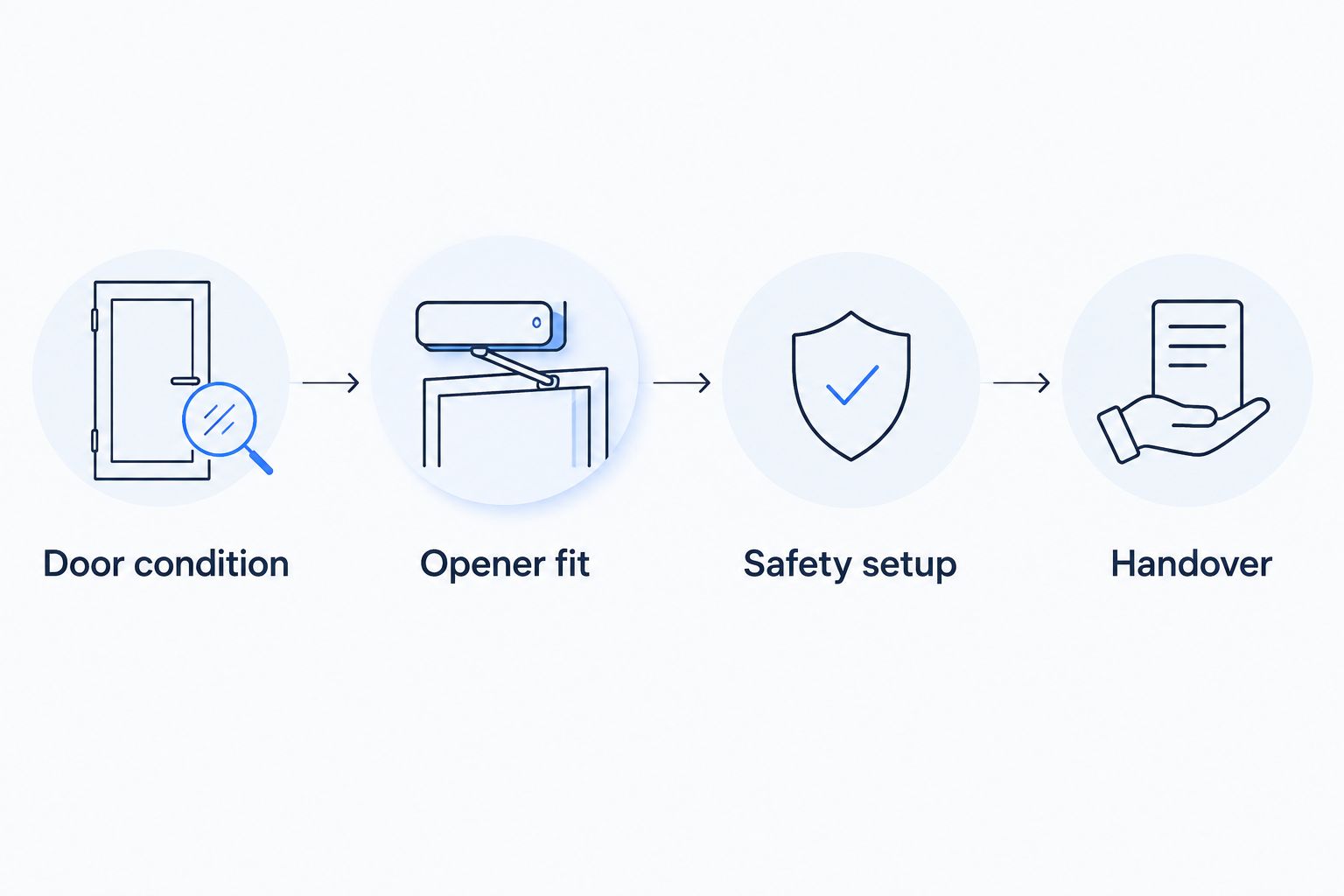
- Door condition: Have a technician inspect springs, cables, rollers, tracks, and door balance. Do not adjust springs or cables yourself.
- Opener fit: Confirm the exact model, rail or shaft requirements, mounting space, electrical access, and battery-backup arrangement.
- Safety setup: Require installation and testing according to the manufacturer's instructions, including the specified entrapment protection.
- Handover: Ask for operating instructions, maintenance guidance, and a demonstration of normal operation and emergency procedures.
Request 2 written estimates when comparing installers. Each should identify the opener model, included components, installation work, removal arrangements, and any door repairs needed separately.
At handover, ask the technician to demonstrate 1 complete opening-and-closing cycle and explain the required safety tests. A normal cycle alone does not prove that every safety function works.
Arrange garage door opener service
Discuss opener installation, door repair, or spring repair for your Fremont home.
How the opener types are ranked
This ranking prioritizes door compatibility, noise near living spaces, battery backup, safety, and installation clearance. It is a category-level buying guide, not a hands-on model test or a ranking based on review scores.
Belt drive takes the default attached-garage position because it avoids chain-drive noise. Chain drive gets the detached-garage slot because noise matters less there; wall mount earns its place when a compatible installation needs clear overhead space.
The garage door opener services at r3dbaqnby9.c24.airoapp.ai include installation and repair. Keep the service brief specific: identify whether you need a fault diagnosed, a replacement fitted, or both.
Which garage door opener should you choose?
Choose a battery-backup belt-drive opener for an attached garage unless the inspection identifies a better fit. Choose chain drive for a detached garage where noise is acceptable, or wall mount when a verified space requirement justifies that layout.
For your 2026 installation, get the exact model and work scope in writing. Do not approve a larger motor as a substitute for repairing a door that binds, drops, or has a damaged spring.
FAQ
What's the best garage door opener for a Fremont home?
A compatible battery-backup belt-drive opener is the default recommendation for an attached Fremont garage. Choose chain drive when detached-garage noise matters less, or wall mount when a compatible installation needs clear ceiling space.
Is a belt-drive opener better than a chain-drive opener?
Belt drive is the better starting point when operating noise near living spaces matters. Chain drive remains a practical option for detached garages, but both types need a compatible door and correct installation.
Do new garage door openers in California need battery backup?
Yes. California requires battery backup for new residential garage door openers sold or installed. Confirm that the proposed model and installation meet the applicable requirements.
Can I put a wall-mount opener on any garage door?
No. Wall-mount openers require compatible door hardware, shaft arrangements, mounting clearance, and electrical access. Have an installer check the exact model's requirements before choosing one.
Will a new opener fix a noisy garage door?
Not if the noise comes from the door's rollers, hinges, tracks, or other hardware. Have the noise diagnosed before replacing the opener so the work addresses the actual source.
Can I use the opener if a garage door spring breaks?
Do not operate a garage door with a broken spring. Keep people away from the door and arrange professional repair rather than trying to make the opener lift it.
What should I ask a garage door opener installer?
Ask for the exact model, compatibility checks, battery-backup details, safety-testing procedure, and a written installation scope. Separate necessary door repairs from the opener replacement so you understand both jobs.
One last thing
A quieter opener and a quieter door are different jobs. Before approving a replacement, ask the technician to identify which component causes the complaint and explain how the proposed work addresses it.
For garage door opener service through r3dbaqnby9.c24.airoapp.ai, describe the symptom first: grinding, shaking, refusing to close, or failing to lift. Start with the fault. Choose the opener after the door assessment.